
 Call for free estimate and shop at home

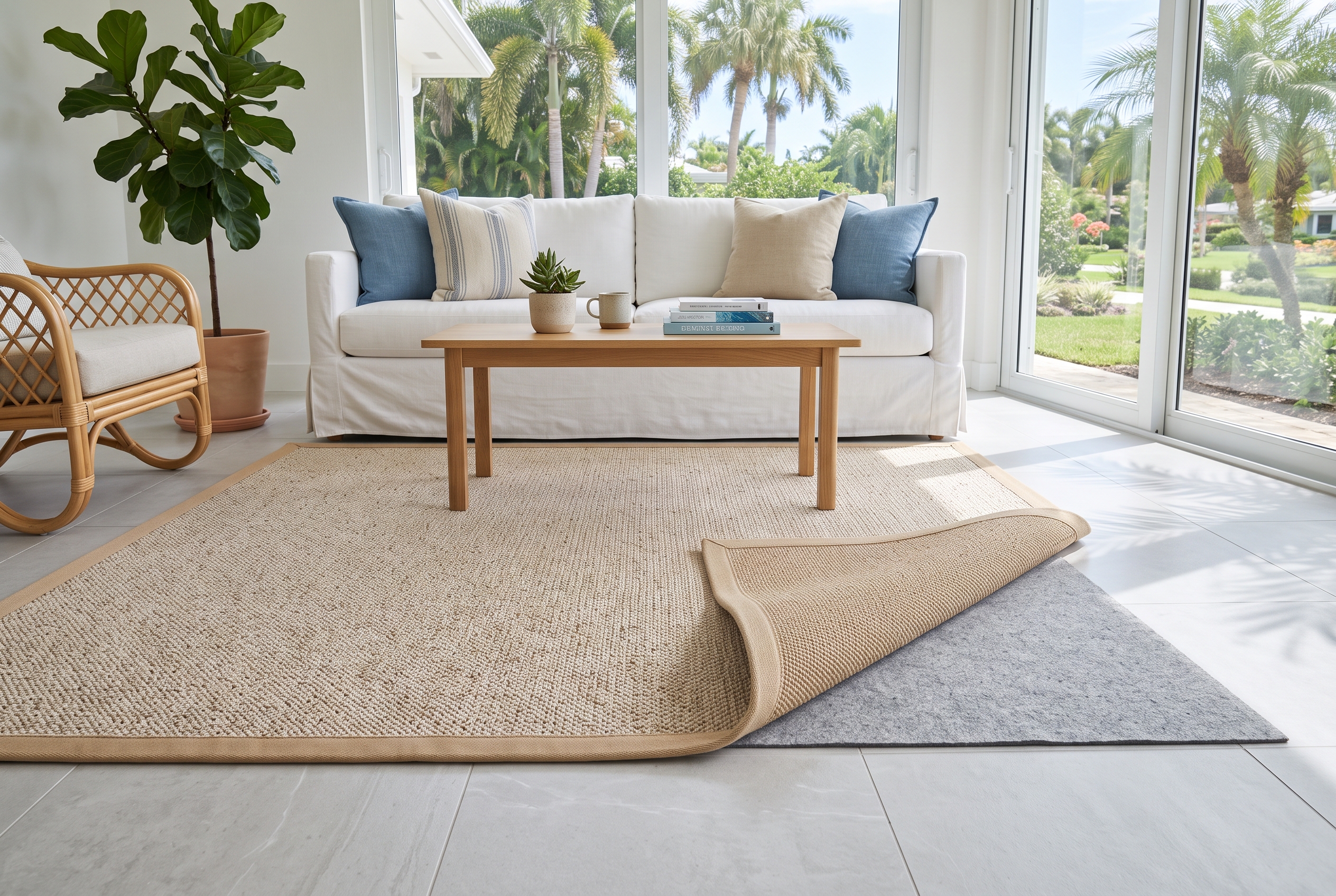
A carpet remnant is new carpet left on the end of a roll and sold as one fixed piece. That is why it costs far less than carpet cut to order, and why its size is whatever happened to be left.
What they cost. Remnants are priced by the piece, not by the yard. Don Bailey Flooring's carpet clearance page lists thousands of remnants in stock at $9.99 to $99 each, and the company offers same-day pickup on in-stock materials at its four South Florida showrooms. For comparison, HomeGuide, a national cost site, puts full-price carpet at $1.00 to $4.50 a square foot for the carpet alone. At that rate a 12-by-12 piece would cost $144 to $648 cut from a roll.
What sizes you'll find. Almost every remnant is 12 feet on one side, because most US carpet is made in 12-foot-wide rolls. The other side is whatever length was left after the last job, often somewhere between 3 and 20 feet.
Turning one into a bound rug. Cut the remnant square, finish the raw edges with binding or serging so they can't ravel, and set it on a pad that suits your floor. Binding is priced by the foot of edge, so an 8-by-10 rug means 36 feet of it.
Most remnants are 12 feet wide, carry one price for the whole piece, and need an edge and a pad before they work as a rug. The rest fits on this card.
| Question | Short answer |
|---|---|
| What is a remnant? | First-quality carpet left on a roll's end |
| Price at Don Bailey | $9.99 to $99 per piece, as posted |
| Width | Usually 12 feet; some 13 1/2 or 15 |
| Length | Whatever was left, often 3 to 20 feet |
| Widest room in one piece | About 11 1/2 feet from a 12-foot roll |
| Edge for a rug | Binding, serging or glue-on tape |
| Pad on tile | A non-slip grip pad |
| Pad on vinyl plank | Non-staining felt, no rubber or latex |
| Warranty as a rug | Often none; ask before it is cut |
The sections run in the order of the title: what a remnant is, what it costs, what sizes it comes in (and carpeting a small room with one), and how to make a bound rug. After that come the checks to make in the store, Berber remnants included, other uses, buying at Don Bailey, care, and common questions.
What Is a Carpet Remnant?
A carpet remnant is the piece left when a roll of carpet has been cut for other jobs. It is new carpet, usually the same first-quality goods as the roll it came from, sold at a discount because it can no longer be cut to order. It is not used carpet and it is not a factory second, though stores sell both, so ask which one you are looking at.
The industry's own dictionary draws finer lines than a store sign. The Carpet and Rug Institute (CRI), the trade group for US carpet makers, defines a remnant as a piece of roll goods usually shorter than nine feet. A 9-to-20-foot piece is a mill end, a 20-to-40-foot piece is a short roll, and a full shipping roll runs about 100 feet. On a showroom floor all the short pieces tend to be called remnants, and this page uses the word the same way.
Where Remnants Come From and Why They Cost Less
Most remnants come from a store's own roll stock. A dealer cuts a 12-foot-wide roll into room-sized pieces for customers, and eventually the last few feet on the roll are too short for the next living room. Others are roll ends bought from mills, discontinued colors, or carpet left over when a job was ordered long.
They cost less because the store is selling a fixed piece, not a cut to order. A roll can be cut to any length. A 12-by-9 remnant can only become something 12 by 9 or smaller, so it waits for a buyer whose room fits, taking up floor space until then. HomeGuide's carpet installation guide notes that the largest carpet discounts are on leftover remnants.
Remnants, Seconds, Used Carpet and Bound Remnant Rugs
Similar names hide different purchases. A remnant is first-quality carpet cut from a roll. A second, sometimes sold as irregular, has a manufacturing flaw such as a streak or a shade shift. Used carpet has been installed before. A bound remnant rug, the kind sold in assorted colors at home centers, is a remnant already cut to a standard size and edged.
The difference shows up in the warranty. Mohawk, one of the carpet brands Don Bailey carries, says in its residential carpet warranty booklet that its warranties apply to first-quality products only. Carpet sold as second quality, irregular, used or mill end is not covered. When a remnant looks like a steal, ask whether it is first quality and whether anything still covers it.
How Much Do Carpet Remnants Cost?
Carpet remnants cost a fraction of full-price carpet, and they are priced per piece rather than per square yard. Don Bailey's carpet clearance page lists remnants in stock from $9.99 to $99 each. HomeGuide's carpet installation guide, written in October 2025, puts full-price carpet at $1.00 to $4.50 a square foot, roughly $9 to $40 a square yard, before pad and labor.
At $99, a 12-by-12 remnant works out to about 69 cents a square foot. The same carpet cut from a roll would start at a dollar a square foot and could run past four.
Even at the bottom of the national range, full-price carpet in a common remnant size costs more than the top of Don Bailey's remnant prices.
| Piece size | Square feet (square yards) | Full price, carpet only |
|---|---|---|
| 12 x 6 ft | 72 (8) | $72 to $324 |
| 12 x 9 ft | 108 (12) | $108 to $486 |
| 12 x 12 ft | 144 (16) | $144 to $648 |
| 12 x 15 ft | 180 (20) | $180 to $810 |
| 12 x 20 ft | 240 (about 27) | $240 to $1,080 |
Is It Cheaper to Buy Carpet Remnants?
Yes, when one piece covers the job without a seam. A remnant that fits a bedroom, a closet or the rug you want is almost always cheaper than the same carpet cut to order, because you pay a clearance price for the whole piece.
It stops being the bargain when the room is wider than the piece. Then you need two remnants and a seam, and two leftovers from different jobs rarely match in color. It can also lose to a carpet sale on a big job, where carpet by the foot gives you one matching roll. And for a small rug in a standard size, compare the remnant plus binding and a pad against a ready-made rug before you decide.
How Much Does a 12x12 Piece of Carpet Cost?
A 12-by-12 piece of carpet is 144 square feet, or 16 square yards. At HomeGuide's national full-price range of $1.00 to $4.50 a square foot, the carpet alone costs $144 to $648, and HomeGuide puts a 12-by-12 room at $250 to $1,100 installed with pad and labor. As a remnant, the same size piece carries one price, and the top of Don Bailey's posted range is $99.
What Makes One Remnant Cost More Than Another
A remnant's price follows what prices carpet on the roll, scaled down for size. Fiber matters most. At full price, HomeGuide's ranges run from about 50 cents a square foot for polyester to $21 for wool. Olefin, nylon and triexta fall in between, so a wool remnant sits at the top of any bin.
After fiber come face weight and density, meaning how much yarn is packed in, then the brand, the style and the size. Patterned carpet and big pieces cost more. The cheapest carpet remnants are usually small polyester or olefin pieces. They are fine for a closet, a kids' room or a mat, and they crush sooner under daily traffic.
The Costs That Come After the Remnant
The tag pays for the carpet and nothing else. A remnant that becomes a rug needs binding, priced by the linear foot of edge, and a rug pad cut to size. A remnant that goes down wall to wall needs carpet pad and an installer.
HomeGuide puts carpet pad at $0.25 to $1.00 a square foot and installation labor at $0.50 to $1.50 a square foot. It also notes that installers usually charge a $75 to $150 minimum. On a remnant-sized room, that minimum often sets the labor bill, so ask for an installed total rather than a per-foot rate.
What Sizes Do Carpet Remnants Come In?
Carpet remnants almost always measure 12 feet on one side, because that is the width most carpet is made in. CRI's glossary says almost all US roll goods are 12 feet, 13 feet 6 inches or 15 feet wide, with 12 feet the most common. The other side is the length left on the roll, so a remnant rack reads like a list of 12-by-somethings: 12 by 4, 12 by 9, 12 by 11 1/2, 12 by 15.
That width decides what a remnant can do. A 12-foot piece can cover a room up to about 11 1/2 feet wide once the installer trims a few inches at each wall. A 13 1/2-foot piece covers about 13 feet, and a 15-foot piece about 14 1/2. Any rug up to the remnant's width is possible, and a room wider than the roll needs a seam.
Matched to the job, a 12-foot remnant covers most small rooms and every common rug size.
| Remnant size | Covers wall to wall | Or becomes |
|---|---|---|
| 12 x 3 to 5 ft | A reach-in closet or landing | Runners and entry mats |
| 12 x 6 to 8 ft | A walk-in closet or nook | A 5 x 8 or 6 x 9 rug |
| 12 x 9 to 11 ft | A small office or nursery | An 8 x 10 or 9 x 12 rug |
| 12 x 12 to 15 ft | A bedroom up to 11 1/2 ft wide | A 10 x 14 or larger rug |
| 12 x 16 ft and up | A long bedroom or den | A long runner plus a rug |
How to Measure a Room for a Remnant
Measure the room at its widest and longest points, including any closet, alcove or doorway the carpet will run into, then add 3 inches for every wall. CRI's residential installation standard asks installers to allow at least 3 inches along each wall for trimming. So a room 11 feet 4 inches wide needs 11 feet 10 inches of carpet, which a 12-foot remnant covers.
Both dimensions have to fit, and the carpet has a direction. CRI's standard says pile should ideally lay toward the room's entrance, and where two pieces meet, their pile must run the same way. Bring a sketch with the door marked, and let the salesperson check the remnant against it.
If the room is wider than the roll, skip the remnant rack. Carpet cut to order keeps one dye lot and a planned seam, and Don Bailey's carpet catalog lets you compare styles by fiber, face weight and density.
Carpeting a Small Room With a Remnant
You found a 12-by-13 remnant and your guest room is 11 by 12. That fits in one piece with room to trim, and it is the best deal a remnant can give you: a whole room of carpet at a clearance price. You still need carpet pad, tack strip (the wooden strips with angled pins that hold carpet at the walls) and an installer.
The room is 132 square feet. At HomeGuide's national rates, pad runs about $33 to $132 and labor about $66 to $198. HomeGuide also notes that installers usually charge a $75 to $150 minimum, which can decide the labor price on a room this size. For a sense of the whole job, it prices a 10-by-12 room, carpet included, at $200 to $900.
Use the pad the carpet's maker calls for. CRI's installation standard requires the cushion to meet the carpet maker's recommendation and warns that ignoring it can void the maker's warranty. For Berber, Mohawk recommends a firm cushion of at least 8 pounds per cubic foot, 1/4 to 3/8 inch thick.
Carpet laid wall to wall goes down under tension. CRI's standard describes stretching it over the pad onto tack strip at every wall with a power stretcher and a knee kicker, which is why a remnant room is a job for an installer. Don Bailey installs the flooring it sells, carpet included, and backs its flooring installation with a 12-month warranty, so a remnant from its stock can go down with its crews.
Sizing a Remnant for a Rug
To size a remnant rug, measure the furniture, not the room. Mohawk Home, Mohawk's rug division, suggests a 5-by-8 rug for medium rooms and an 8-by-10 or larger for living rooms, dining rooms and main bedrooms. Under a dining table, it suggests adding at least 4 feet to the table's length and width so chairs stay on the rug when pulled out. In a seating area, the rug can hold just the front legs of the sofa and chairs.
A remnant rug doesn't have to land on a standard size. If your seating group needs 7 by 11, cut 7 by 11. Tape the outline on the floor with painter's tape and live with it for a day before anything is cut, and check that any door in its path still swings over the rug and its pad.
Runners From a Remnant
A runner's length is limited by the remnant's length, not its width. Cut across a 12-foot-wide remnant and you get runners up to 12 feet long, as wide as you like. A 3-by-20 hallway runner needs a remnant at least 20 feet long, cut along its length, and that is where a mill end earns its keep.
In a rental, a bound remnant runner is the sensible choice for a hallway that takes a beating. HomeGuide notes that property owners often replace carpet after each tenant, and a runner cut from a remnant costs little enough to replace on the same schedule.
How to Turn a Carpet Remnant Into a Bound Rug
To turn a carpet remnant into a rug, cut it square to the size you want, finish every raw edge so it can't ravel, and put the right pad under it. CRI lists rugs pieced from tufted broadloom carpet as one of the standard ways area rugs are made, so this is ordinary work for a carpet store.
- Pick the finished size from your furniture layout and tape it out on the floor.
- Choose the edge finish and its color, usually matched to the carpet or the floor.
- Cut the remnant square with a straightedge and a sharp carpet knife.
- Bind or serge the edges, or apply glue-on binding tape if you are doing it yourself.
- Let the rug lie flat for a day so roll marks relax.
- Cut a pad about an inch smaller than the rug on every side and lay the rug over it.
Cutting a Remnant Straight
A straight, square cut is what makes a bound rug look store-made. Snap a chalk line or lay a long straightedge, check the corners with a framing square, and cut in one smooth pass with a fresh blade. Bob Vila's carpet-patching guide suggests laying cut pile face down and cutting along the underside, which it says makes the cut easier and more precise.
Loop pile is different. CRI's installation standard prefers row-cutting, trimming from the face between two rows of tufts, so the blade runs between loops instead of through them. Without a row cutter, have the store make the cut.
Binding, Serging and Other Edge Finishes
Binding and serging are the two standard ways to finish a carpet edge. CRI defines binding as a band or strip sewn over the edge to protect, strengthen or decorate it, and serging as heavy yarn sewn around the edge in a close overcast stitch. Both stop raveling, and the choice is mostly about looks and budget.
Bond Products, which makes binding machines, tapes and serging yarn, describes standard binding as a fabric tape folded over the edge and stitched on by machine, usually showing about 1/4 to 3/8 inch on top. The company calls it the most common and economical edge. Serging wraps continuous yarn about 3/8 inch wide around the edge, like a very close whip stitch, and gives a more finished look at a higher price. Wide fabric binding, often seen on sisal-look rugs, and sewn-on fringe are the decorative options.
Standard binding is the value choice for most remnant rugs, and serging or wide binding costs more for a dressier edge.
| Edge finish | What it is | Relative cost | Suits |
|---|---|---|---|
| Standard binding | Narrow tape sewn over the edge | Lowest | Most synthetic remnants |
| Wide binding | Broad fabric border | Higher | Low, flat or sisal-look carpet |
| Serging | Yarn wrapped around the edge | Higher | Plush, wool, dressy rugs |
| Glue-on tape | DIY binding set with hot glue | Lowest cash cost | Small, thin rugs and mats |
Bond Products' rule for the binding material is simple: cotton for a cotton or wool carpet, synthetic for a synthetic carpet. Color is taste. A binding matched to the carpet makes the rug look cut from the room, and a darker or lighter one outlines it.
What Binding Costs
Binding is priced by the linear foot of edge, so a rug's perimeter sets the bill. Add the four sides: a 5-by-8 rug has 26 feet of edge, an 8-by-10 has 36 and a 9-by-12 has 42. Multiply by the shop's per-foot price for the finish you chose, and you have the binding cost before any cutting charge.
Per-foot rates vary by shop and region, and we found no national survey that publishes them, so ask for the price of each finish. Expect standard binding to cost the least and serging and wide binding more. HomeGuide's stair runner guide says the same about runners, noting that custom serging and designer bindings raise the cost.
Edge length grows slowly as rugs get bigger, so binding is a small share of the cost of a large remnant rug.
| Finished rug | Typical spot | Edge to bind |
|---|---|---|
| 2 x 3 ft | Inside the door | 10 ft |
| 3 x 5 ft | Entry or bedside | 16 ft |
| 5 x 8 ft | Medium room or office | 26 ft |
| 6 x 9 ft | Small living area | 30 ft |
| 8 x 10 ft | Living or dining room | 36 ft |
| 9 x 12 ft | Large living or main bedroom | 42 ft |
| 3 x 12 ft runner | Hallway | 30 ft |
Is It Cheaper to Bind a Remnant or Buy a Rug?
It depends on the size you need. A bound remnant usually wins for a large rug, an odd size or a rug that has to take real traffic. You get dense, first-quality carpet at a clearance price, and binding is a small add-on. For a small rug in a standard size, a ready-made rug can come in cheaper than a remnant plus binding and a pad.
Do the arithmetic before you choose. Add the remnant price, the edge length times the per-foot binding rate, and a pad. Then compare that total with a ready-made rug of the same size and a similar pile, not with the cheapest rug in the store.
Can I Bind a Carpet Remnant Myself?
Yes. Glue-on binding tape and a hot glue gun will finish a small, thin remnant. Bond Products sells one such tape, Instabind, and its steps are short. Trim the edges straight with a carpet cutter and a straightedge, and start the tape in the middle of one side. Notch its flat flange at each corner, and run a 1/8-inch bead of hot glue between tape and carpet all the way around.
Know the limits. The same company explains that carpet sold by the foot is stiff, with a latex layer and a secondary backing, which is why shops bind it on machines. It pitches its glue-on tape at smaller projects. A thick plush, a large rug or anything facing daily traffic is a job for a binding machine.
Seal the Edge the Day You Cut It
A cut carpet edge starts to ravel as soon as it is handled. CRI's installation standard calls for seam adhesive across the backing of trimmed edges to protect them from raveling. Where carpet meets a hard floor with no molding, it asks for a bead of seam sealer at least 1/8 inch wide. If your remnant will wait a few days for binding, run a thin line of carpet seam sealer along the cut, especially on Berber and other loop pile.
Sealing is also the budget route. A remnant with its cut edges sealed will serve as a plain rug for a while, and you can have it bound when the budget allows.
Which Rug Pad Goes Under a Remnant Rug
The pad under a remnant rug depends on the floor beneath it. On tile, use a non-slip grip pad, such as natural rubber or felt with a rubber grip face. A rug that slides is a fall risk, and the CDC's home fall-prevention checklist says loose rugs need double-sided tape or a non-slip backing, or should come up.
On luxury vinyl plank (LVP), use a non-staining felt pad, not rubber or latex. Mannington, whose ADURA vinyl Don Bailey carries, says rubber-backed and latex-backed mats will stain or damage its floors. Shaw's vinyl care guide asks for mats without latex or rubber backings to reduce possible discoloration. A carpet remnant has a latex layer inside its back, so a felt pad between rug and plank is cheap insurance.
On hardwood, a breathable felt or felt-and-rubber pad keeps grit off the finish. Whatever the floor, cut the pad about an inch smaller than the rug on every side, so the bound edge rests on the floor and lies flat.
Corners, Shapes and Curling
A remnant rug doesn't have to be a square-cornered rectangle. Rounded or clipped corners soften a rug near a door swing, and a shop can cut around a column or follow a curved sofa. Don Bailey's guide to binding options, corners and shapes walks through those choices.
If a finished rug's corner curls or an edge frays later, it can usually be fixed. The article on fixing loose or fraying rug edges at home covers the quick repairs and when rebinding is the better answer.
How to Buy a Good Carpet Remnant
Buying a good carpet remnant means checking what the tag leaves out. The tag gives the price and the size. How the carpet will wear, how it will look in your light and whether it will bind cleanly take a minute of looking and touching, so bring a tape measure, your room sketch and your phone.
Read the Label, or Ask for the Style Name
Don't count on a remnant carrying a full label. The Federal Trade Commission's textile labeling guide lets a store sell remnants without individual tags if a display sign gives the fiber content, or says the content is unknown. The same rules exempt carpet backings from fiber labeling, so any fiber line you do find describes the face yarn you walk on.
Ask for the style name and the maker. With those, a salesperson can usually pull the carpet's specifications, and you learn the fiber, the face weight and whether it came from a first-quality roll.
Choose the Fiber for the Room
Pick the fiber for the room the remnant is going into. CRI says nearly all US carpet is nylon, olefin (polypropylene), polyester or a natural fiber, and each has a job. Nylon is durable, resilient and abrasion resistant, so it suits a hallway or a family room. Olefin resists fading, moisture and stains and is favorably priced, which fits a lanai, a garage gym or a rental.
Polyester holds bright color and resists water-based stains, fine for bedrooms. Wool is resilient and hides soil but costs the most. You will also see triexta, a polyester-family fiber that HomeGuide lists under trade names including SmartStrand, priced between polyester and nylon.
Density, Face Weight and the Bend Test
Density tells you more about how a remnant will wear than its weight does. CRI explains that synthetic face yarn is almost impossible to wear out, but carpet with too little density crushes. Mohawk's warranty booklet puts it plainly: the denser the fiber is packed, the better the carpet performs, and thin carpet loses its looks faster.
Face weight is the ounces of yarn per square yard, not the carpet's total weight, which includes the backing. To judge density with no spec sheet, fold a corner back on itself. If you can see backing between the rows of tufts, what CRI calls grinning, the pile is thin. Tufts that close ranks and hide the backing mean a denser carpet.
Pile Type and Twist
Carpet comes in three pile types. Cut pile has its yarn loops sheared open, loop pile leaves them intact, and cut-and-loop mixes both for a pattern. Within cut pile, twist decides the look. CRI says a high twist makes a frieze, the curly, casual texture; a medium twist makes a saxony; and a low twist makes a smooth, velvety plush.
Shading, where cut pile looks lighter or darker depending on which way the yarn leans, is normal. Mohawk's booklet says it shows most on solid-color cut pile and is not a defect. If it would bother you, choose a textured or flecked remnant.
Berber Carpet Remnants
You have spotted a Berber remnant at a good price and want to know if it makes a good rug. It does, with two cautions. Berber is loop-pile carpet, usually with darker flecks, and it makes a tough, low rug that hides dirt.
The first caution is the cut edge, which can ravel along a row of loops, so a Berber rug needs its edges sealed or bound right away. CRI's installation standard prefers row-cutting on carpet like this.
The second caution is pets. CRI says cut pile suits pets better than loop pile, because claws catch in loops and a dog or cat can pull them out. If a Berber rug will live with a dog, pick a tight, low loop, keep nails trimmed, and clip any loop that pops up rather than pulling it. If you would rather skip loops altogether, a frieze remnant gives a similar casual look in cut pile.
Backing, Edges and Storage Marks
Turn the remnant over before you buy it. According to CRI, most residential carpet has a woven primary backing that holds the tufts, a latex layer that locks them in, and a secondary backing glued on underneath. Look for a secondary backing that is firmly attached, edges that are not already fraying, and no water stains or musty smell.
Commercial remnants sometimes have a hard, one-piece back with no fabric underneath. CRI calls that a unitary backing and says it is meant only for glue-down installation, so it makes a stiff rug.
Flattened bands across a rolled remnant are usually crush marks from storage. CRI describes them as usually temporary, and they tend to relax once the piece lies flat for a while.
Color in Your Own Light
Store lighting is not your lighting. Mohawk suggests viewing large carpet samples in daylight and again by lamplight in the room where they will go, because the color shifts. Take a photo of the remnant by a window or the door before you commit.
CRI notes that light colors show soil sooner, while medium and darker colors, tweeds and textures hide it in busy areas. If you need two remnants to match, they must come from the same dye lot, meaning the same dyeing batch, and two leftovers from different jobs usually do not.
Warranty and Returns
A remnant bound into a rug usually leaves the carpet warranty behind. Mohawk's residential warranty booklet says its carpet warranties give no coverage for area rugs, apart from Mohawk's own custom rug program. It adds that custom bound rugs can be returned only for freight damage, defective workmanship or failure to meet the ordered size. Other makers' terms differ, so ask what covers the piece you are buying.
A first-quality remnant installed wall to wall is a different case. Mohawk's booklet makes its carpet warranties depend on professional installation to CRI's installation standards, so how the remnant goes down matters as much as where it came from.
Ask about returns before the remnant is cut. Remnants are often sold as is, and a piece that has been cut down and bound is custom work.
Getting a Remnant Home Without Creasing It
Roll a remnant, never fold it. CRI's installation standard says carpet cuts should not be bent or folded in transport, and if folding can't be avoided, the carpet should be unrolled and laid flat as soon as it arrives. Folded carpet can crease, wrinkle, crush and show pile reversal, a patch that looks a different shade.
A 12-foot roll won't fit in most cars, so measure your vehicle before you buy or ask about pickup and delivery options. If the remnant is going down wall to wall, CRI's standard also asks for at least 24 hours of acclimation in the room, at 65 to 95 F, before installation.
Other Ways to Use a Remnant
Beyond rugs and small rooms, a carpet remnant can become an entry mat, cover a short flight of stairs, line a closet or patch your own carpet. For layout and edge-color ideas, see designing one-of-a-kind rugs from leftover carpet. The practical side of each use follows.
Entry Mats That Stop Sand
A bound remnant makes one of the best entry mats in a beach-town house, because sand is abrasive and the mat is what stops it. Mannington asks owners of its vinyl floors to use doormats at every entrance to keep sand and grit off the floor. CRI describes entry systems where a mat inside the door keeps brushing shoes and a longer runner reaches 10 to 15 feet in to catch the rest.
Cut the inside mat from a dense, low nylon or olefin remnant, which traps sand and dries fast. CRI suggests vacuuming entry mats often, shaking or brushing out embedded soil weekly, and washing them with a brush and mild detergent, then letting them dry completely.
Stairs
A remnant can cover a short flight of stairs or become a stair runner, but stairs are installation work, not a rug on a step. CRI's installation standard calls for tack strip on each tread, pile running down the stairs and no raw edges showing, so every exposed edge has to be bound or sealed. The CDC's checklist asks that carpet on steps be firmly attached to every step.
Two cost notes. HomeGuide puts stair runner installation at $40 to $100 a step, and Mohawk's booklet excludes appearance changes on stairs from its carpet warranties. A remnant is still a sensible way to buy the carpet for a flight, as long as it is long enough to run the whole flight in one direction.
Smaller Jobs for Leftover Pieces
Pieces too small for a room or a rug still earn their keep around the house. Bind or seal the edges on any piece that will be walked on, so a small mat doesn't fray or curl into something to trip over.
- A closet floor, where a 12-by-4 piece often covers a reach-in closet in one go.
- A pet bed or crate liner, bound so it can be lifted and shaken out.
- A soft corner for a play area or a home gym, cut from a dense, low pile.
- A patch for your own carpet. Shaw asks carpet buyers to keep a small cutting with their records, and Bob Vila's patching guide calls a matching piece of carpet the critical prerequisite for a patch.
Buying Carpet Remnants at Don Bailey Flooring
Don Bailey Flooring is a family-owned flooring dealer that has served South Florida for over 50 years, with showrooms on Biscayne Boulevard and in northwest Miami, Fort Lauderdale and Miramar. It keeps thousands of carpet remnants in stock, priced from $9.99 to $99 each, and its services include carpet binding, area rug binding and custom area rugs.
Bring the room's measurements with the door marked, a photo, and a note of the floor the rug will sit on, so the pad can be matched. Ask which edge finishes the carpet binding and area rug binding services offer for the remnant you choose. If no remnant fits, Don Bailey's custom area rugs can be made in the size and shape you need.
Caring for a Remnant Rug in South Florida
A remnant rug gets the same care as wall-to-wall carpet, plus one rule for this climate: never let it stay wet. CRI recommends vacuuming all carpet at least weekly and busy spots such as halls and entries more often, more still with pets. Mohawk's booklet suggests turning the beater bar off for thick loop, casual frieze and shag.
For spills, Mohawk's routine is to scoop up solids, blot from the outside in with a white towel, and try plain warm water first. Next comes a quarter teaspoon of clear dish detergent in a cup of water, and never rubbing or scrubbing.
If the rug gets soaked, lift it off the tile and dry both. The EPA says water-damaged items should be dried within 24 to 48 hours to prevent mold, and it warns that carpet which does grow mold may have to be thrown out. It also suggests keeping indoor humidity under 60 percent, ideally 30 to 50.
Small habits keep a remnant rug looking new. Clip any tuft that rises out of the pile with scissors, which CRI says should never be pulled. Turn the rug now and then so traffic spreads out, as CRI suggests. Work furniture dents back up with the edge of a coin, another CRI tip, then vacuum.
Carpet Remnant Questions People Ask
Where can I find cheap carpet remnants?
The cheapest carpet remnants are usually at flooring dealers that cut carpet from their own rolls, because that is where leftovers pile up. Home centers sell pre-bound remnant rugs in standard sizes. HomeGuide notes that the biggest carpet sales tend to come in the fall, and small polyester or olefin pieces are the lowest-priced on any rack.
How much is a 20x20 piece of carpet?
A 20-by-20 area is 400 square feet, about 44 square yards. At HomeGuide's national full-price range of $1.00 to $4.50 a square foot, the carpet alone costs $400 to $1,800, and HomeGuide puts a 20-by-20 room at $700 to $3,000 installed. You won't find it as one remnant, because carpet is made 12, 13 1/2 or 15 feet wide, so a 20-foot room needs two widths and a seam.
Can a carpet remnant go on a lanai or patio?
Yes, if it is olefin, and ordinary indoor carpet should stay inside. CRI notes that olefin can be engineered for outdoor use and resists fading and moisture, and its care guide describes hosing outdoor carpet down and letting it dry completely. Mohawk's booklet excludes carpet installed outdoors from its warranties, so treat an outdoor remnant as a cheap, replaceable piece.
Can I install a carpet remnant myself?
It depends on the job: yes as a loose rug, but wall-to-wall installation is work for an installer. CRI's standard stretches carpet over pad onto tack strip with a power stretcher, and Mohawk's booklet ties its carpet warranties to professional installation. A remnant laid wall to wall without stretching will ripple.
Can two carpet remnants be joined into one bigger rug?
Yes, two remnants of the same carpet can be seamed with hot-melt seaming tape, but the result is only as good as the match. CRI's standard requires the pile of two adjoining pieces to run the same way. Mohawk's booklet says seams do show and there are no invisible seams, and two remnants of the same style from different dye lots may not match in color.
How long does a carpet remnant rug last?
A remnant rug lasts about as long as the same carpet would on the floor, because it is the same carpet. HomeGuide's rough lifespans run 3 to 15 years for nylon, 5 to 15 for polyester, 3 to 10 for olefin and 8 to 20 for wool, depending on quality and traffic. A rug has one advantage over wall-to-wall: you can turn it to spread the wear.
Are commercial carpet remnants good for rugs?
It depends on the back. A commercial remnant with a fabric secondary backing binds well and wears hard, which suits a garage gym, an office or an entry. One with a hard, one-piece back, what CRI calls a unitary backing made only for glue-down installation, makes a stiff rug that is harder to bind and lay flat.
Do carpet remnants have a new-carpet smell?
Yes, a freshly cut one can, and it fades within days. Mohawk says the smell comes from the latex that locks the tufts in place, and that 90 to 95 percent of it dissipates within 24 to 72 hours. A remnant that has sat in a warehouse has usually aired out already. Unroll a new rug in a ventilated room for a day or two.
Can you put a remnant rug on top of wall-to-wall carpet?
Yes, and a bound remnant is a good way to protect a traffic lane or hide a worn patch, but it will creep unless it sits on a pad made for use over carpet. CRI suggests small rugs in front of heavily used chairs to reduce wear on the carpet underneath. Choose a lower pile than the carpet under it, so the rug lies flat instead of bunching.
If you have measured a room or a rug and want to see what the remnant rack can do with it, bring the numbers to a Don Bailey showroom. For a room you want carpeted wall to wall, request a free estimate and the team will measure and price the job, remnant or roll.


